
GDPR vs HIPAA: Key Differences for Data Protection Compliance
These frameworks protect different data types with distinct scopes, requiring separate compliance strategies even when systems overlap in a single organization.
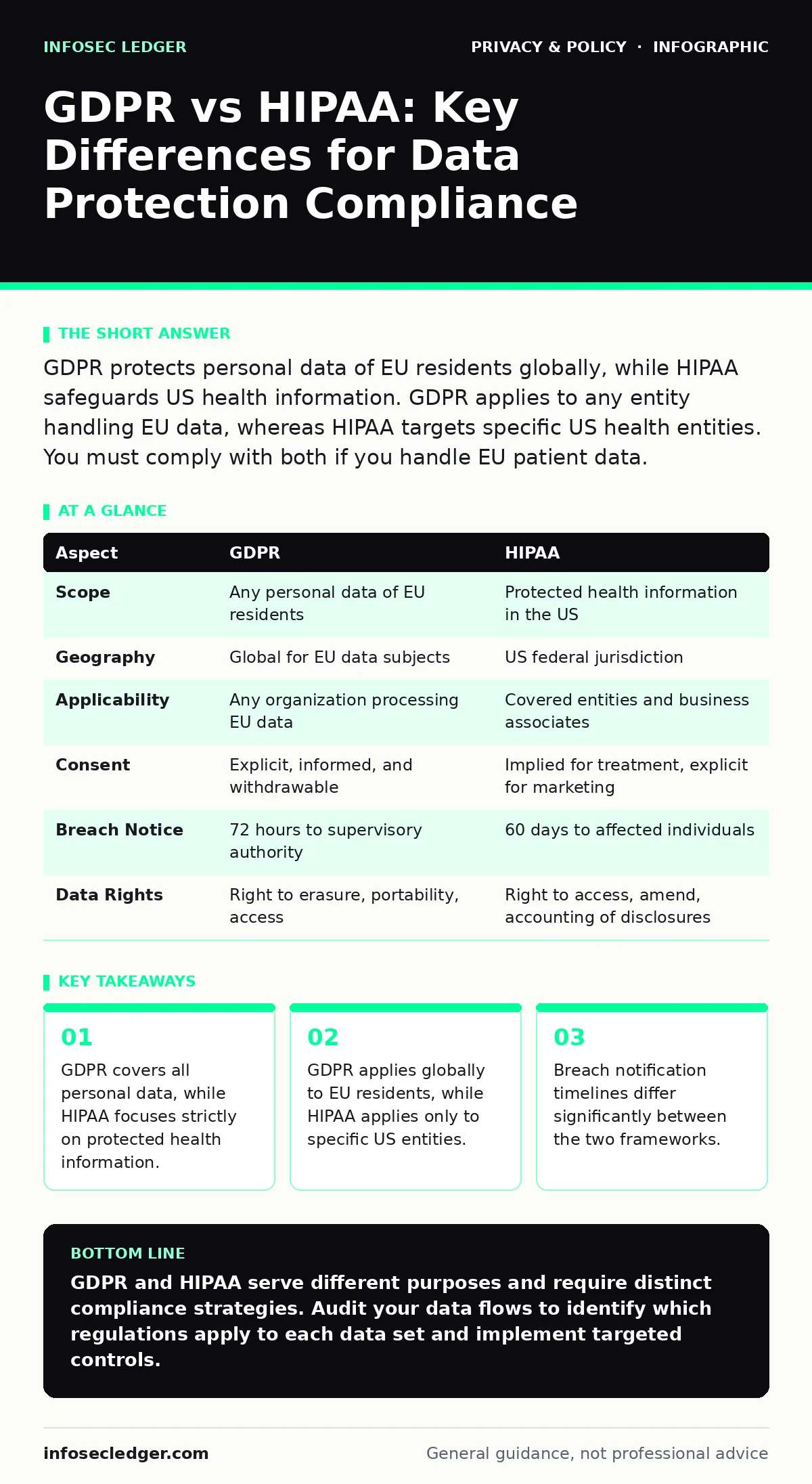
GDPR protects personal data of EU residents globally, while HIPAA safeguards US health information. GDPR applies to any entity handling EU data, whereas HIPAA targets specific US health entities. You must comply with both if you handle EU patient data.
GDPR vs HIPAA: The Core Difference
GDPR vs HIPAA represents a clash between broad privacy rights and specific health data protection. The General Data Protection Regulation covers any information identifying an EU resident, regardless of industry or location. The Health Insurance Portability and Accountability Act protects only specific health data within the US healthcare system. You cannot treat them as interchangeable. GDPR imposes stricter consent requirements and higher fines, while HIPAA focuses on administrative and physical safeguards for health records. Understanding this distinction prevents compliance failures.
What Is GDPR?
GDPR is a comprehensive privacy law for individuals in the European Union. It applies to any organization processing personal data of EU residents, regardless of where the organization is located. Personal data includes names, email addresses, IP addresses, and cookie identifiers. The framework emphasizes individual rights, such as the right to be forgotten and the right to data portability. Organizations must have a lawful basis for processing, which often means explicit consent. Failure to comply results in significant fines and reputational damage. This approach aligns with privacy by design principles, embedding protection into system architecture.
What Is HIPAA?
HIPAA is a US federal law protecting sensitive patient health information. It applies to covered entities like hospitals, clinics, and health insurers, as well as their business associates. Protected Health Information includes medical records, billing data, and any health-related data that can identify a patient. HIPAA mandates specific administrative, physical, and technical safeguards. It does not cover general personal data or employee health records unless they are part of a health plan. The focus is on maintaining confidentiality and integrity of health data during transmission and storage.
Point-by-Point Comparison
| Aspect | GDPR | HIPAA |
|---|---|---|
| Scope | Any personal data of EU residents | Protected health information in the US |
| Geography | Global for EU data subjects | US federal jurisdiction |
| Applicability | Any organization processing EU data | Covered entities and business associates |
| Consent | Explicit, informed, and withdrawable | Implied for treatment, explicit for marketing |
| Breach Notice | 72 hours to supervisory authority | 60 days to affected individuals |
| Data Rights | Right to erasure, portability, access | Right to access, amend, accounting of disclosures |
When to Choose Which
Choose GDPR compliance when you process any data from individuals in the European Economic Area. This includes website visitors, customers, and employees. You must implement data protection impact assessments and appoint a Data Protection Officer if required. The framework demands transparency in data collection and clear mechanisms for user consent. Online tracking mechanisms must respect user choices and provide easy opt-out options. Ignoring GDPR exposes your business to legal action from EU authorities and affected individuals.
Choose HIPAA compliance when you handle protected health information in the United States. This requires strict access controls, audit logs, and encryption for data at rest and in transit. You must execute business associate agreements with any vendor accessing health data. The framework focuses on preventing unauthorized access to medical records. Two-factor authentication for personal accounts is a common technical control, but HIPAA requires broader systemic security measures. Non-compliance can result in civil and criminal penalties.
Where They Overlap
Organizations often face both frameworks simultaneously. Suppose you run a telehealth platform serving patients in New York and Berlin. You must comply with HIPAA for US patients and GDPR for EU patients. This creates complex data governance challenges. You need separate data processing agreements and distinct consent mechanisms. Anonymization techniques can help reduce regulatory burden by removing identifiable information.
However, true anonymization is difficult to achieve and verify. Third-party cookies may violate GDPR consent rules if not managed correctly, while also posing risks to HIPAA-covered health data if linked to patient records. App permission management becomes critical when mobile apps collect both health and location data. CCPA adds another layer for California residents, further complicating the landscape. Private browsing mode does not exempt organizations from these responsibilities, as data is still processed by servers.
Key takeaways
- GDPR covers all personal data, while HIPAA focuses strictly on protected health information.
- GDPR applies globally to EU residents, while HIPAA applies only to specific US entities.
- Breach notification timelines differ significantly between the two frameworks.
GDPR and HIPAA serve different purposes and require distinct compliance strategies. Audit your data flows to identify which regulations apply to each data set and implement targeted controls.
Frequently asked questions
Does GDPR apply to US companies?
Yes, if the company processes personal data of individuals located in the European Union, regardless of the company's physical location.
Is HIPAA stricter than GDPR?
Not necessarily. GDPR has broader scope and higher potential fines, while HIPAA has more specific technical safeguards for health data.
Can I use HIPAA standards for GDPR compliance?
HIPAA standards provide a strong foundation but do not fully satisfy GDPR requirements, particularly regarding consent and data subject rights.
What is the biggest difference in breach notification?
GDPR requires notification to authorities within 72 hours, while HIPAA allows up to 60 days to notify affected individuals.
How this guide was produced: written by the InfoSec Ledger editorial team with AI assistance, checked against the public references listed below, and reviewed when the facts change. See our editorial policy or report an error.