Anti-Facial-Recognition Gear: What Works and What Fails
Adversarial patterns and infrared frames can blind automated cameras, but the garments often attract human scrutiny while failing against modern gait analysis.
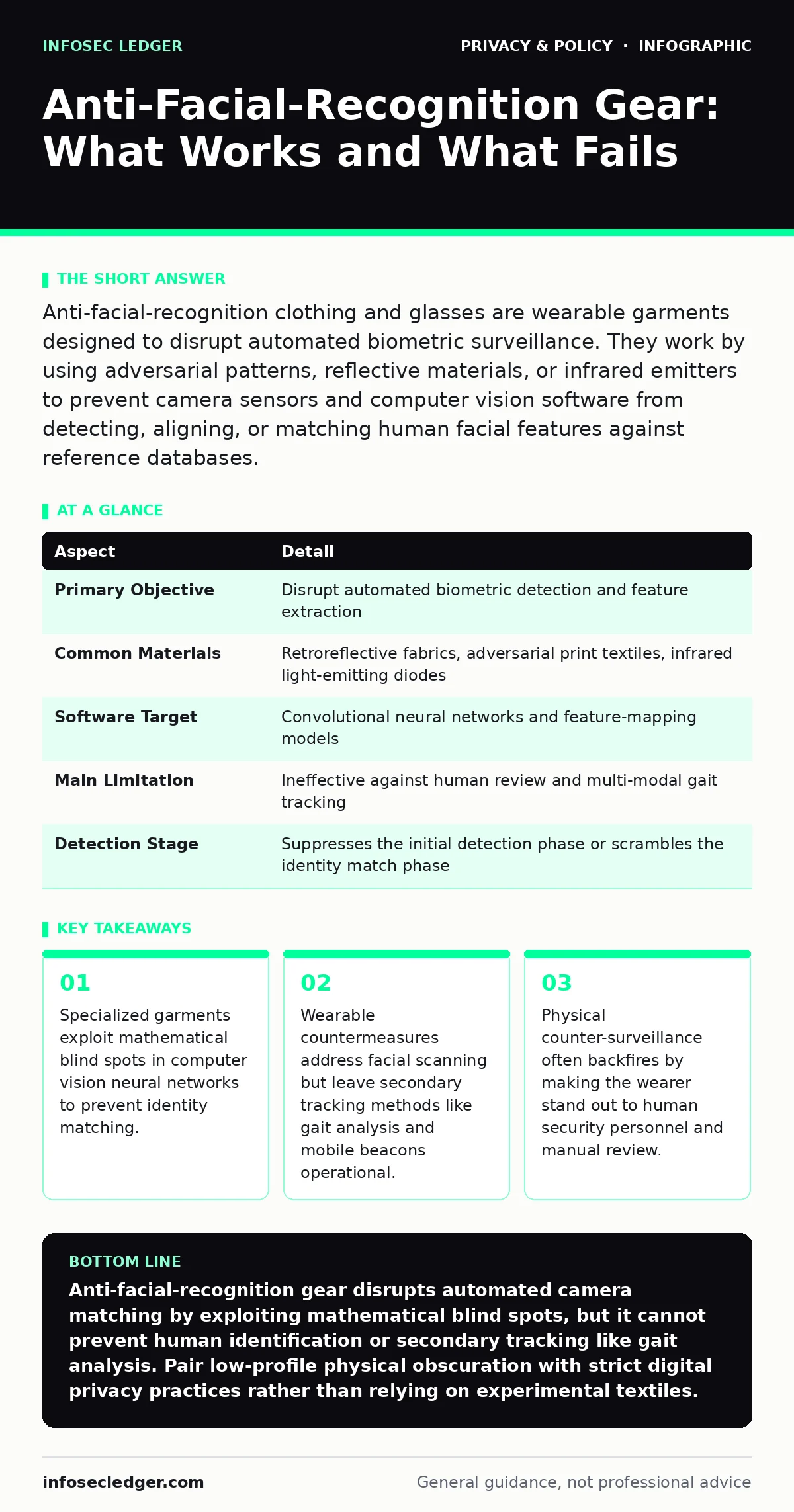
Anti-facial-recognition clothing and glasses are wearable garments designed to disrupt automated biometric surveillance. They work by using adversarial patterns, reflective materials, or infrared emitters to prevent camera sensors and computer vision software from detecting, aligning, or matching human facial features against reference databases.
How Optical Camouflage Translates to Modern Biometrics
A magician uses misdirection to make an audience look away from the hand palming a coin. Anti-facial-recognition clothing operates on the exact same trick, but the audience is a camera sensor and a mathematical model rather than a human being. The garment introduces optical noise that misdirects the automated system, forcing the software to calculate empty air instead of your identity.
Modern surveillance relies on biometric templates, which are mathematical representations of the distances between facial landmarks like your nose bridge, cheekbones, and eye sockets. Anti-surveillance gear deliberately interrupts the scanning pipeline. If an automated camera cannot verify that a face exists in the frame, it cannot calculate those distances or query an identity database.
| Aspect | Detail |
|---|---|
| Primary Objective | Disrupt automated biometric detection and feature extraction |
| Common Materials | Retroreflective fabrics, adversarial print textiles, infrared light-emitting diodes |
| Software Target | Convolutional neural networks and feature-mapping models |
| Main Limitation | Ineffective against human review and multi-modal gait tracking |
| Detection Stage | Suppresses the initial detection phase or scrambles the identity match phase |
The Mechanics Behind Evasion Apparel
Computer vision architectures process images through multi-stage pipelines. An image sensor captures ambient light, a detection algorithm flags candidate faces, an alignment system squares the image, and a neural network generates an identity vector. Anti-facial-recognition gear disrupts this sequence at either the physical hardware layer or the algorithmic processing layer.
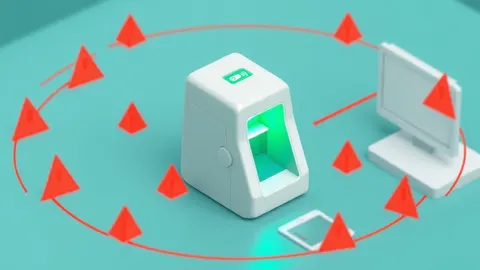
Hardware-level disruption targets optical sensors directly. Garments embedded with near-infrared light-emitting diodes flood infrared-sensitive security cameras with blinding light invisible to the human eye. The camera sensor overexposes around the wearer's head, washing out the facial landmarks needed for measurement. Retroreflective fabrics achieve a similar result by bouncing the camera's own illumination flash directly back into the lens.
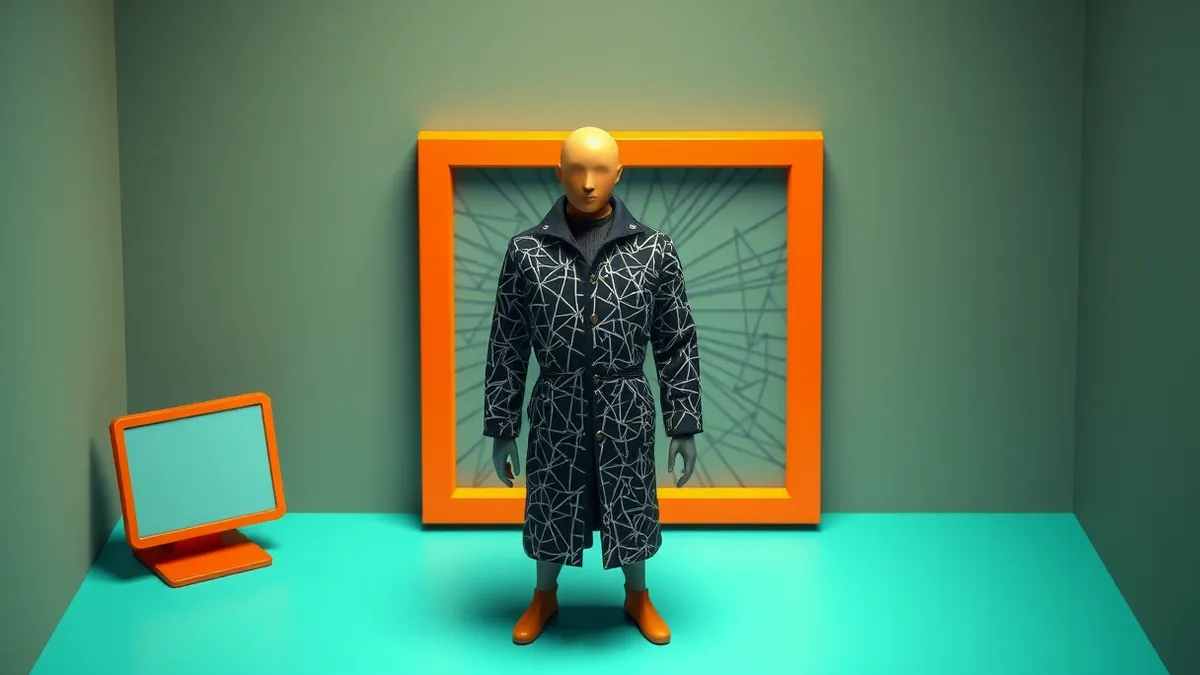
Algorithmic disruption attacks the mathematical software. Adversarial patterns are specially calculated pixel arrangements printed onto fabric that feed deceptive pixel data to neural networks. These patterns cause the computer vision model to interpret the fabric folds as a face instead of your actual features, or they alter your face's mathematical signature so drastically that the confidence score drops below the matching threshold.
Who Faces the Impact of Automated Scanning
Passive biometric tracking touches anyone walking through public transit hubs, retail corridors, and modern commercial offices. Camera networks track individuals across private storefronts to build behavioral profiles, logging visit frequencies and physical browsing habits without direct interaction. This automated profiling mirrors the tracking mechanisms of third-party cookies on the web, translating continuous digital observation into physical architecture.
Business operators encounter this technology from two directions. You face the compliance obligations of running commercial cameras that capture visitor data, alongside the personal privacy risks of moving through public commercial spaces. The drive to adopt counter-surveillance apparel stems from a desire to reclaim the baseline anonymity that physical distance once provided automatically.
True physical privacy requires systematic anonymization at the collection source, yet public spaces rarely offer opt-out mechanisms. When individuals realize their faces act as permanent, unchangeable account identifiers, physical countermeasures become the only direct self-defense available against unconsented data harvesting.
Common Forms of Counter-Surveillance Wearables
Counter-surveillance garments divide into 3 primary categories, each engineered against specific camera designs and algorithmic models.
- Adversarial Print Apparel: Hoodies, scarves, and shirts printed with calculated geometric or abstract shapes that trick object-detection algorithms. These prints register to the software as dozens of false faces, overwhelming the processor and causing it to discard the true face.
- Infrared-Emitting Eyewear: Glasses frames housing miniature near-infrared lights pointed upward at the wearer's forehead and cheeks. Security cameras operating in night-vision or low-light modes capture a blinding flare over the eyes, preventing the system from identifying the ocular triangle.
- Reflective and Distortive Visors: Curved, tinted shields and retroreflective headwear that bounce directional light. These physical barriers block optical sensors from capturing the continuous symmetry of the nose and jawline, stopping the software at the initial alignment stage.
What People Misunderstand About Anti-Surveillance Gear
A widespread misconception assumes that blinding a facial recognition camera guarantees total anonymity in public spaces. Modern enterprise tracking systems rarely depend on facial analysis alone. Automated systems routinely combine facial scans with gait analysis, which measures the unique cadences, stride lengths, and body mechanics of how you walk. Specialized clothing does nothing to alter your skeletal motion profile.
Another dangerous assumption holds that adversarial clothing makes you invisible to security personnel. While a patterned sweater may fool a deep learning model, it draws immediate suspicion from human guards monitoring video feeds. The garment defeats the automated log only to invite direct manual investigation, creating an unintended security bottleneck.
[Camera Sensor] ---> [Object Detection] ---> [Feature Extraction] ---> [Database Match]
(Adversarial prints create (Infrared LEDs
dozens of false faces) wash out landmarks)
Many users also believe that an adversarial print works indefinitely. In reality, adversarial prints target specific mathematical weights within current neural network architectures. When surveillance operators retrain their models on newer datasets that account for adversarial examples, existing fabric patterns lose their efficacy overnight. The prints age out just as static defensive rules do in software security.
See also: Public Wi-Fi finder apps explained: hidden privacy trade-offs · Privacy by Design: The 7 Foundational Principles Explained
How to Reduce Tracking Risks Without Novelty Garments
Physical garments form only one thin layer of defense against modern identity tracking. You achieve broader, more predictable privacy improvements by minimizing the digital markers that surveillance networks cross-reference against physical locations.
- Check your commercial and personal devices to disable location sharing permissions for non-essential applications.
- Audit online directories by submitting opt-out requests to people-search sites that link your legal name to your photograph and residential address.
- Avoid relying on physical props when visiting sensitive facilities; adopt basic low-profile clothing devoid of high-contrast logos or unique silhouettes that aid manual visual tracking.
- Use everyday accessories such as standard brimmed hats and neutral medical masks, which legally obscure the lower and upper thirds of the facial plane without triggering adversarial alerts.
- Incorporate structural data security principles, like privacy by design, into your own business operations so customer and employee movements are not logged unnecessarily.
Physical counter-surveillance gear serves as a technical stopgap rather than an absolute shield. Relying on specialized textiles to protect your identity often creates a false sense of security, ignoring the multiple digital breadcrumbs your mobile devices broadcast continuously. True risk reduction balances physical awareness with rigorous control over the digital profiles that camera networks attempt to match.
Key takeaways
- Specialized garments exploit mathematical blind spots in computer vision neural networks to prevent identity matching.
- Wearable countermeasures address facial scanning but leave secondary tracking methods like gait analysis and mobile beacons operational.
- Physical counter-surveillance often backfires by making the wearer stand out to human security personnel and manual review.
Anti-facial-recognition gear disrupts automated camera matching by exploiting mathematical blind spots, but it cannot prevent human identification or secondary tracking like gait analysis. Pair low-profile physical obscuration with strict digital privacy practices rather than relying on experimental textiles.
Frequently asked questions
Can ordinary sunglasses block facial recognition systems?
Standard sunglasses block basic eye-socket detection on simple cameras, but advanced surveillance cameras use infrared sensors and 3D depth mapping that easily calculate identity from your remaining exposed facial geometry.
Is wearing anti-facial-recognition clothing illegal?
Wearing anti-facial-recognition clothing is generally legal in public areas, though specific jurisdictions enforce anti-mask laws or ban face coverings inside government facilities, financial institutions, and private businesses.
Why do adversarial patterns stop working over time?
Adversarial patterns stop working because they exploit specific algorithmic parameters; once surveillance vendors update their software by training models against those specific patterns, the system learns to ignore the interference.
Does a standard medical mask protect against facial recognition?
A standard medical mask obscures the mouth and jawline, reducing matching accuracy on older systems, but modern enterprise recognition engines are trained to identify individuals using only the exposed eye, brow, and forehead regions.
How this guide was produced: written by the InfoSec Ledger editorial team with AI assistance, checked against the public references listed below, and reviewed when the facts change. See our editorial policy or report an error.