Arm AGI CPU Modelled to Double AMD Rack Performance in AI Workloads
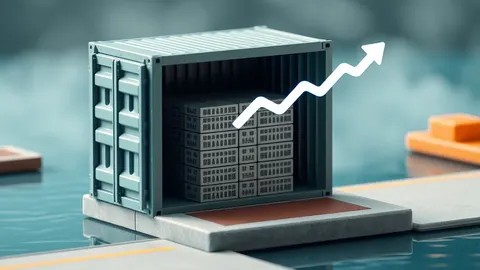
New benchmarks show Arm servers deliver nearly twice the rack-level output of AMD chips, driven by higher core density within fixed power limits.
Key points
- Arm’s AGI CPU achieved a 1.99x average performance ratio over AMD’s EPYC 9755 across seven agentic AI tests.
- A 24-kW rack can hold up to 23 Arm servers versus 13 dual-socket AMD systems, increasing core density significantly.
- Production hardware validation is not yet complete, as findings rely partly on power-based modelling.
Signal65, working with Arm, published benchmark results showing that Arm’s AGI CPU outperforms AMD’s EPYC 9755 in agentic artificial intelligence tasks. The assessment measured processor results and then modelled rack-level performance under a fixed power budget, revealing a substantial advantage for the Arm architecture in this specific workload category.
The testing covered seven workloads, including autonomous task execution and information retrieval, such as Terminal-Bench 2 and SWE-bench. Arm’s processor delivered an average performance ratio of 1.99x compared to the AMD chip. Individual workload results ranged from 1.43x to 3.19x, with the strongest advantage appearing in specific reasoning and planning scenarios.
Technical context
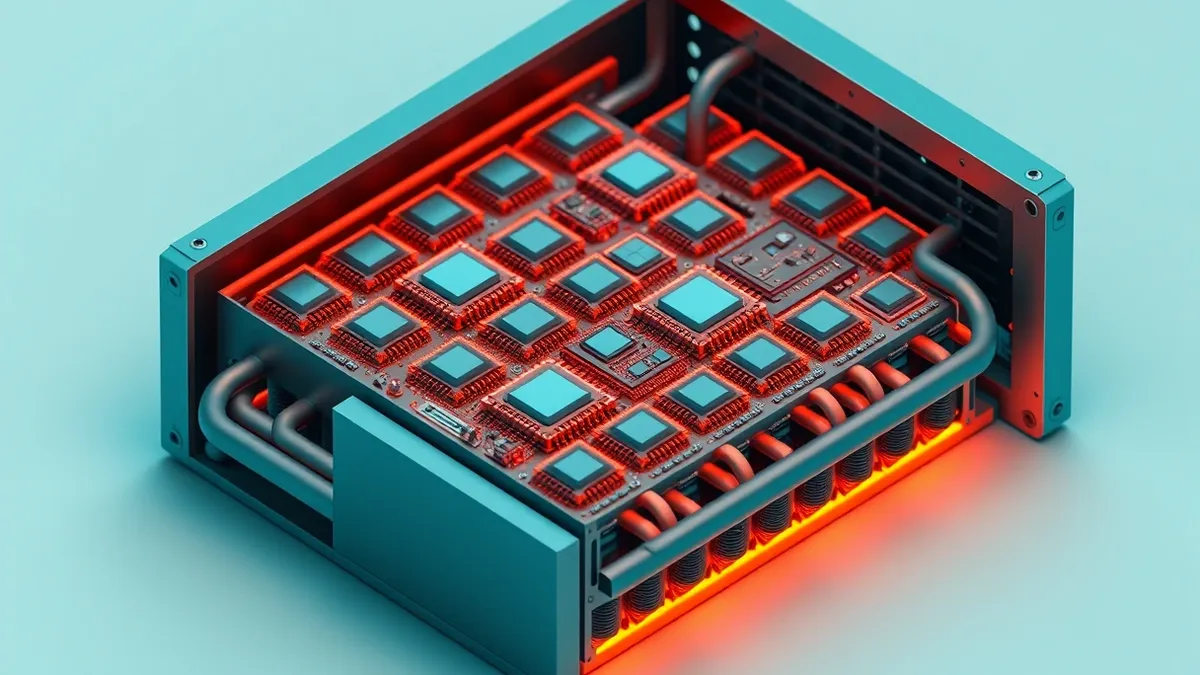
The performance gap stems largely from differences in server power consumption and resulting rack density. Arm’s individual servers consume between 950 and 1,050 watts, while AMD’s dual-socket EPYC 9755 systems are rated at 1,700 watts. This efficiency allows a standard 24-kW rack to accommodate 21 to 23 Arm servers, compared to only 13 AMD systems. Consequently, the Arm configuration provides between 5,712 and 5,888 physical cores, versus 3,328 for the AMD setup.
Who is affected
The findings are most relevant to organizations evaluating infrastructure for agentic AI, model serving, and autonomous software tools. The report indicates that database and vector-search operations might require 30% to 35% fewer racks to achieve equivalent processing power with Arm hardware. These metrics apply to modelled scenarios, meaning actual production results may vary once final hardware is widely available and tested.
Defender's checklist
Infrastructure planners should review power allocations and cooling capacities when considering high-density server deployments. Teams must distinguish between modelled performance data and validated production hardware metrics before making procurement decisions. Evaluate whether current network and storage subsystems can support the increased core density and associated I/O demands of denser rack configurations.
Operational impact
Leaders should direct engineering teams to assess whether current power and cooling infrastructure supports higher-density server deployments. Procurement groups must verify that modelled performance gains translate to actual production workloads before committing capital. Security and compliance officers should review access controls for any new isolated execution environments, ensuring that faster sandbox creation does not bypass existing audit trails or policy checks.
What to do and how to stay safe: Arm
- Review current power budgets to determine if existing racks can support higher-density server configurations without exceeding limits.
- Validate benchmark results against your specific workloads, as modelled performance may differ from real-world application demands.
- Assess whether increased core density requires upgrades to network bandwidth or storage I/O capabilities to maintain performance.
- Monitor vendor announcements for confirmed production hardware availability and independent testing results before making purchasing decisions.
Step-by-step guide: Implementing AI Usage Policies at Work: A Step-by-Step Framework
General security guidance from the InfoSec Ledger newsroom. It is not confirmed advice from the organisations named in this story.
Frequently asked questions
How much faster is Arm's AGI CPU compared to AMD's EPYC 9755?
Arm’s processor achieved an average performance ratio of 1.99x across seven agentic AI workloads, with individual results ranging from 1.43x to 3.19x faster.
Is this based on final production hardware?
No, the findings rely partly on power-based modelling, and testing on final production hardware remains outstanding according to the report.
How does rack density compare between the two architectures?
A 24-kW rack can accommodate up to 23 Arm servers, compared to 13 dual-socket AMD EPYC 9755 systems, due to differences in power consumption per server.