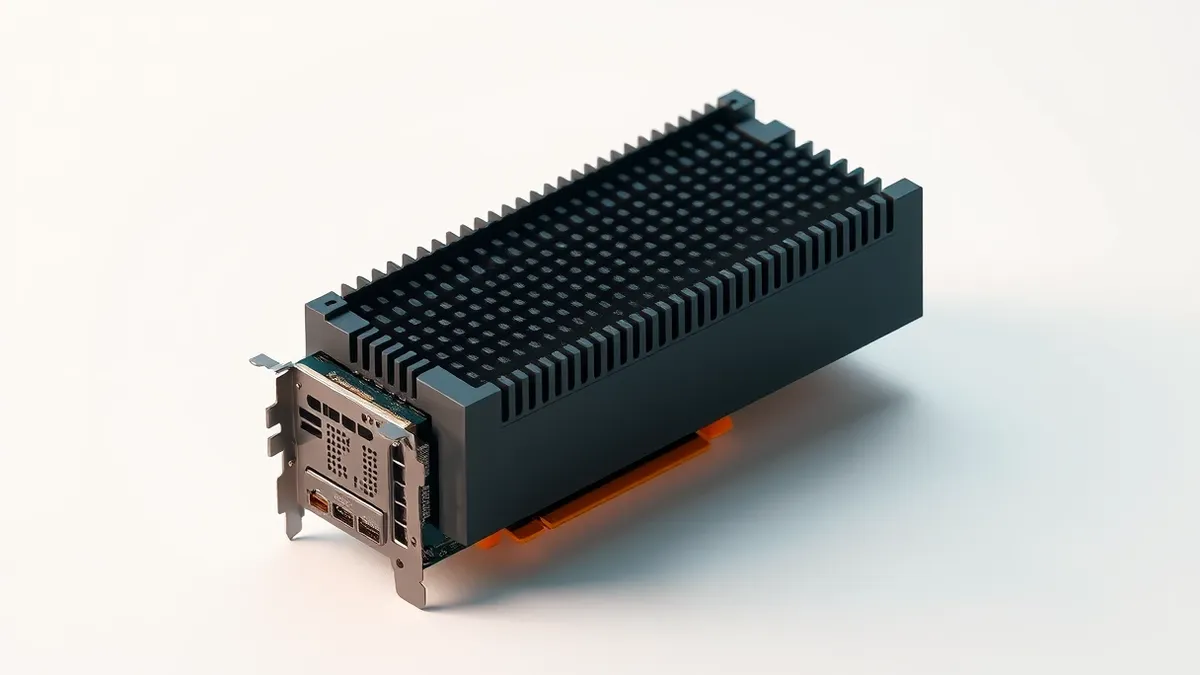
350W 1.3PF GPU: Intel D-series packs 480GB LPDDR5X, beats Nvidia B300 memory
Intel unveils a high-capacity accelerator using LPDDR5X memory to support large language models on single cards, targeting enterprise AI workloads.
Key points
- Intel D-series GPU features 480GB of LPDDR5X memory, surpassing Nvidia's 288GB Blackwell Ultra B300.
- The accelerator delivers 1.3 petaflops FP8 performance and 1.5TB/s bandwidth at 350W power draw.
- Designed for AI inference, it supports models up to 300 billion parameters on a single card.
Intel announced the D-series GPU at the Open Compute Project Global Summit, establishing a new benchmark for graphics processor memory capacity. The accelerator includes 480GB of LPDDR5X memory, a configuration specifically engineered for demanding artificial intelligence inference tasks rather than traditional gaming or graphics rendering applications.
The device outpaces Nvidia’s Blackwell Ultra B300, which provides 288GB of HBM3e memory, by a significant margin in total memory size. Intel selected LPDDR5X, a technology common in power-efficient laptops, over GDDR7 to prioritize capacity and energy efficiency. This design choice allows the card to host large language models with up to 300 billion parameters independently.
Technical specifications and design
Intel rates the D-series at 1.3 petaflops for FP8 computation, a format that accelerates AI operations while lowering memory demands compared to higher-precision formats. The system also offers 1.5TB/s of memory bandwidth, determining how rapidly data moves between storage and the processor. These metrics define the theoretical performance ceiling for inference workloads.
The accelerator is rated for 350W power consumption. Intel intends for the hardware to integrate into existing data center infrastructure without requiring major physical modifications. This compatibility aims to reduce the barrier to entry for organizations adopting high-capacity AI inference solutions.
Enterprise applicability
An eight-GPU system built with D-series cards can accommodate models exceeding one trillion parameters. Intel states these capabilities serve lengthy prompts, simultaneous inference requests, and robotics applications requiring responsive processing. The focus is on making high-capacity inference practical and economical to scale for enterprise services.
Anil Nanduri, vice president of AI Products & GTM at Intel Data Center Group, emphasized that inference is becoming the defining AI workload. He noted that enterprises require infrastructure delivering appropriate performance at manageable costs, a goal the D-series aims to address through its high-memory architecture.
Defender's checklist
Pricing and availability for the Intel D-series GPU remain undisclosed. Organizations planning AI infrastructure upgrades should monitor official Intel channels for release dates and licensing terms. The hardware is designed for data center deployment, so procurement teams should evaluate current rack space and power delivery capabilities.
Operational impact
When evaluating new high-capacity AI hardware, operations teams should assess whether existing cooling systems can handle increased thermal loads from dense GPU clusters. Procurement departments must verify that power distribution units in data centers support the specific wattage requirements of new accelerators.
IT leadership should coordinate with finance to model total cost of ownership, including energy expenses, before committing to large-scale deployments. Vendor contracts should specify performance guarantees for inference workloads to ensure operational continuity. Stakeholders need to align on deployment timelines to avoid disrupting current AI service levels during hardware transitions.
What to do and how to stay safe: Intel
- Review current data center power capacity to ensure it supports high-wattage GPU deployments.
- Evaluate whether existing cooling infrastructure can handle the thermal output of dense AI clusters.
- Monitor vendor announcements for pricing and availability details before budgeting for new hardware.
- Assess current AI model sizes to determine if single-card inference capabilities meet operational needs.
Step-by-step guide: Implementing AI Usage Policies at Work: A Step-by-Step Framework
General security guidance from the InfoSec Ledger newsroom. It is not confirmed advice from the organisations named in this story.
Frequently asked questions
How does the Intel D-series memory compare to Nvidia's current offerings?
The Intel D-series has 480GB of LPDDR5X memory, which is larger than the 288GB of HBM3e memory in Nvidia's Blackwell Ultra B300.
What type of memory does the Intel D-series GPU use?
It uses LPDDR5X memory, a technology typically found in laptops, rather than GDDR7 or HBM.
Can the D-series GPU run large language models?
Yes, a single card can support models with up to 300 billion parameters, while an eight-GPU system can handle models over one trillion parameters.